The 2024 Satellite Show was held in Washington DC showcasing accelerating orbital infrastructure development in an increasingly competitive market.


The 2024 Satellite Show was held in Washington DC showcasing accelerating orbital infrastructure development in an increasingly competitive market.

| By Xuan Zhong | Scientists from Kyoto University in Japan are working with NASA and JAXA to test wood as a building material for disposable satellites.

| By Xuan Zhong | The UK Space Agency has signed an agreement with the US company Axiom Space to send British astronauts into space.

| By Xuan Zhong | NASA announced funding of eight short-term research projects, each receiving $150,000, that focus on the physiological and psychological challenges astronauts may encounter in space.
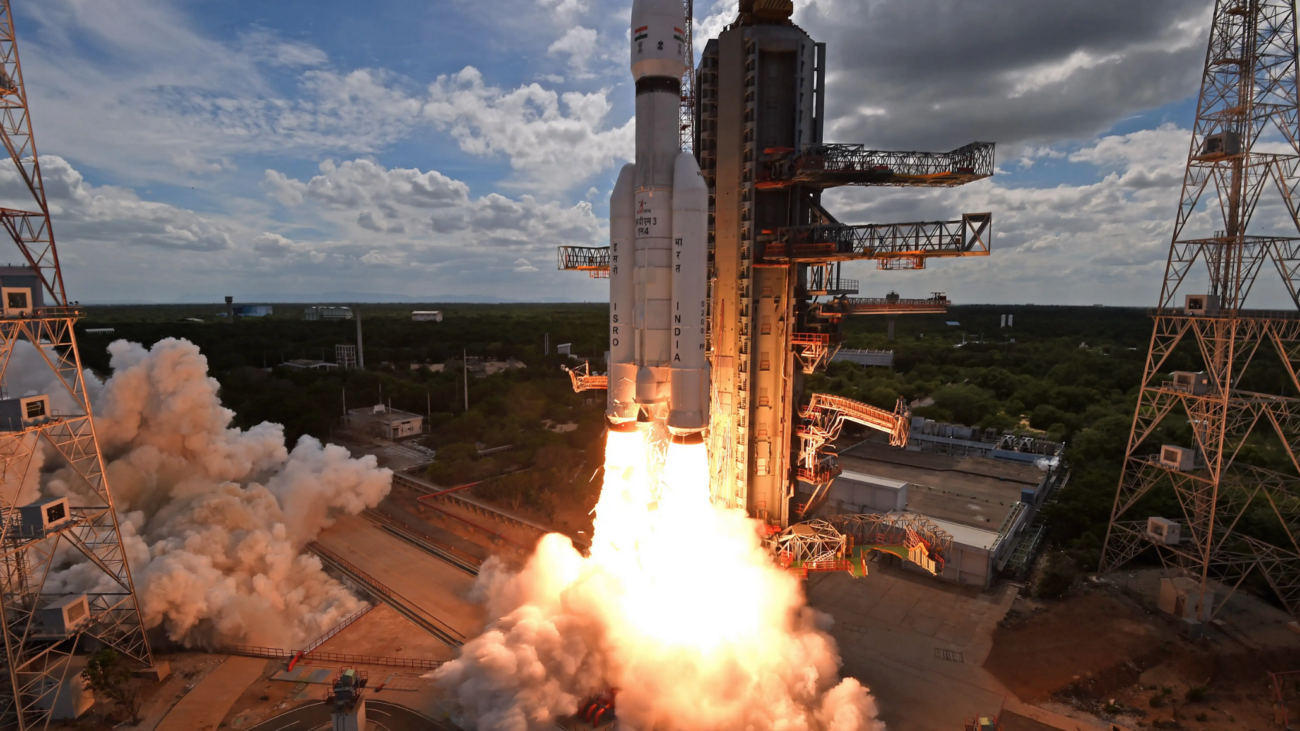
| By Emma Kuruppacherry | On August 23rd India made history as the first country to successfully land on the Moon’s south pole — a key exploration step in the search for lunar water.

| By Xuan Zhong | China is expanding its international space partnerships by creating programs to access lunar mineral samples and conduct research on China’s Tiangong space station.

| By Xuan Zhong | Pulsar Fusion, a UK space firm, is working on a notional rocket engine design using an innovative Direct Fusion Drive to generate thrust from nuclear fusion.

The Satellite Show 2023 conference was held from March 14th to 16th in Washington D.C. The conference provided a platform for industry leaders, government officials, and satellite enthusiasts to discuss the latest trends and innovations in the satellite industry. The conference included keynote speeches, panel discussions, and an exhibit hall showcasing the latest satellite technologies.
One of the major themes of the conference was the growing importance of low Earth orbit (LEO) satellite constellations. These constellations are composed of small satellites in orbit and have the potential to greatly expand satellite capabilities for a range of applications, from broadband internet to remote sensing. Keynote speakers discussed the benefits of LEO constellations, as well as the challenges of managing large numbers of satellites in orbit.
Another focus of the conference was the role of satellites in the emerging space economy. Speakers discussed the potential for new commercial opportunities in space, from space tourism to asteroid mining, and the importance of satellite technologies for enabling these activities. The conference also highlighted the role of satellites in supporting global efforts to address climate change and environmental sustainability.
The exhibit hall at the conference featured a wide range of companies showcasing their latest satellite technologies, including new satellite constellations, advanced antennas, and innovative spacecraft designs. Several companies also demonstrated new applications for satellite data, such as monitoring wildfires and other natural disasters, as well as tracking ships and aircraft.
One of the keynote speeches focused on the growing importance of satellite imagery and data analytics for national security. The speaker discussed how satellite imagery can be used to identify and track security threats, as well as the importance of data analytics for processing large amounts of satellite data in real-time.
Another panel discussion focused on the role of satellites in providing connectivity to underserved regions of the world. The panelists discussed the potential of satellite internet to bridge the digital divide, as well as the challenges of bringing affordable and reliable internet access to remote and rural areas.
The conference also featured presentations on the latest developments in satellite propulsion technologies, including electric and plasma propulsion systems. The speakers discussed the advantages of these technologies, such as increased efficiency and reduced fuel consumption, as well as their potential applications for interplanetary missions and deep space exploration.
Once again, the annual Satellite Show conference provided valuable insights into the latest trends and innovations in the satellite industry. From LEO constellations to satellite imagery and data analytics, the conference showcased the many ways that satellite technologies are transforming our world and driving new commercial and scientific opportunities. As the industry continues to evolve and grow, it is clear that satellites will play an increasingly important role in shaping our future.

The NASA Office of Small Business Programs hosted a virtual business development conference on Thursday, October 6th 2022. The online event brought together NASA officials, industry prime contractors, and more than a hundred small business vendors to learn about NASA’s outreach programs to promote business partnerships with small businesses. The NASA team is looking to meet new goals of working with more women, minority, veteran, HUBZone, HBCU, MSI, and other small and disadvantaged businesses through direct contracts as well as having the companies work in subcontracting roles with prime contractors.
In the event program guide entitled “Small Business Makes a BIG Difference: Launching Equity in Procurement”, Mr. Glenn Delgado, NASA Associate Administrator for the Office of Small Business Programs, stated:
“Between fiscal year FY17 and FY21, dollars awarded directly to small business increased by $741M or 27%. At the same time our prime contractors increased awards to their small business partners by an additional $904M or 32%. The total number of prime and subcontracting dollars awarded, increased by almost $1.7B or 29.8%. This increase is a testament to the growing availability of opportunities for small businesses at NASA.”
Mr. Delgado shared information on the top prime contractors supporting NASA and explained small businesses can partner with these organizations as subcontractors to support NASA programs. Some of the top NASA contractors included CALTECH, Boeing, SpaceX, Northrop Grumman, Lockheed Martin, Jacobs Technologies, KBR, and SAIC.
The event presenters emphasized NASA’s efforts and avenues supporting the increased outreach and funding for small businesses and provided several additional online links available for further information:
NASA Small Business Program
https://www.nasa.gov/osbp
https://www.nasa.gov/osbp/active-contract-listings
Twitter: https://twitter.com/NASA_OSBP
Facebook: https://www.facebook.com/NASASmallBusiness
NASA Mentor-Protégé Program
https://www.nasa.gov/osbp/mentor-protege-program
NASA Acquisition Forecast
https://www.hq.nasa.gov/office/procurement/forecast
The next NASA webinar, “How to do Business with the NASA IT Procurement Office” will be held on October 19, 2022, at 1:00 p.m. ET.

Introduction
The cybersecurity threat to satellites will continue to increase as state-sponsored hackers, criminal organizations, terrorists, and individual hackers and hacking groups seek to disrupt satellite networks for espionage, financial gain, political objectives, to create disorder, or acquire fame among other hackers. Establishing a strong defense against these threats requires a holistic approach that addresses the different aspects of cybersecurity throughout the satellite control system including computer network security, physical security, personnel security, and satellite production supply chain security. All of these system components create an opportunity for hackers to attack a satellite network. This report will examine how hackers have attacked satellite control networks and discuss priorities and recommendations for defending against this threat.
Current Threats
Hacking components of satellite networks has been an ongoing threat for many years. There have been several documented cases of cyberattacks targeting satellite control networks, personnel, technology, and infrastructure throughout the years.[i], [ii],[iii],[iv],[v],[vi],[vii],[viii],[ix]
These attacks are probably not the only intrusions to have occurred. Skilled hackers have likely gained additional unauthorized access to satellite control systems without being detected. Accordingly, it’s essential to understand the particular vulnerabilities in satellite control networks.
Satellites and their control networks are vulnerable to a variety of cyberattacks and intrusions. Mr. Martin Rutishauser, an authority on penetration testing and satellite cybersecurity, detailed ten categories of satellite vulnerabilities at the Hashdays Security and Risk Conference 2012 in Lucerne, Switzerland. These vulnerabilities range from innocuous tracking and monitoring of satellite orbits through actual physical destruction of a satellite:[xi]
These vulnerabilities can be exploited by hackers if satellite control networks are not properly secured against cyberattacks.Although comprehensive cybersecurity is essential to protect satellite control networks, a prioritized approach should be implemented to defend against the most pressing and likely threats in conjunction with creating a comprehensive cybersecurity plan to defend against all threats.
Satellite Cybersecurity Priorities
Among the many threats targeting satellites and their control networks, non-kinetic cyberattacks including jamming communications and hacking into satellite control networks are the most significant and prolific threats.[xii] Defending against these primary threats should be the first priority in developing and implementing cyber defense strategies by using anti-jamming, encryption, and network security tools, technology, and techniques to counter these threats while working with external organizations to collectively pool knowledge and resources regarding the dynamic threat.
Anti-Jamming: US Army Major General Peter Gallagher, Director of Architecture, Operations, Networks, and Space for the Army Chief Information Officer emphasized the importance of protecting satellite communications against jamming during discussions at the MilSatcom USA Conference on June 29th, 2017. “The biggest thing that we need is protected satcom, anti-jam capability, in the future. Anticipating future threats and making sure we address them, I think that’s the most critical thing.” [xiii] Accordingly, current space systems need to be evaluated for suitability for upgrading anti-jamming capabilities and future systems must have anti-jamming capabilities included as part of their design.
Encryption: The Chatham House satellite cybersecurity report, “Space, the Final Frontier for Cybersecurity” notes the primary need for encryption in space systems. The report asserts that although it is not a comprehensive solution to counter every potential threat, the use of secure encryption is considered to be the best defense for space systems.[xiv] The challenge, though, is how to get cybersecurity added to control systems that are already in place on the ground and into satellites in orbit. Patricia Lewis, a research director at Chatham House explained “A large part of the critical infrastructure is sitting up there and not a lot can be done about it – it’s very old technology and it has never had any cyber protection built in. So the big question there is how much can they be retrofitted and what happens going forward.”[xv]
Cybersecurity companies are solving this problem by developing software and hardware solutions that can be retrofitted into existing networks and be a core component in the design of new networks. The cybersecurity company Fornetix has invented an encryption key management system called Key Orchestration that can dynamically distribute encryption keys throughout existing networks. This dynamic encryption capability provides an exceptionally strong layer of cyber defense that can be rapidly changed to protect networks against repeated cyberattacks.
Network Security: State-supported, criminal, and non-state hackers are adept at penetrating networks and infecting systems with viruses and ransomware. Brian Teeple, the Deputy Chief Information Officer for Command, Control, Communications, and Computers (C4) and Information Infrastructure Capabilities at the Department of Defense stated “The need for [network cybersecurity] protection is important because adversaries can attack any point in a system. It comes down to ‘what is the weakest link? What are they going to go after? You have to start looking at terminals and user equipment like they’re computers. There are cyber vulnerabilities and we’ve got to get cyber protections in place.”[xvi] This weakest link was echoed by Lisa Forte, founder of Red Goat Cybersecurity, when she highlighted the vulnerability of equipment in satellite ground stations, supply chains, and staff that will be actively targeted by hackers employing increasingly sophisticated cyberattacks, social engineering, and new artificial intelligence (AI) hacking tools on a massive scale.[xvii]
It is vital for network managers to anticipate both deliberate cybersecurity attacks as well as unintentional infections from authorized users unwittingly exposing networks to viruses via infected e-mail attachments, malicious websites, and improperly sanitized removable media from office and home computers. The STUXNET virus in Iran and the agent.btz virus on US CENTCOM military computers spread through systems lacking adequate and current security.[xviii] Satellite control networks need to be isolated from connections to external networks and require layered defenses that presume cyberattacks and unintentional exposure to viruses by authorized users will occur. Moreover, steps need to be taken to ensure network system suppliers are not providing components that have cyber vulnerabilities or surreptitiously pre-installed malicious software. Hughes Network Systems, for example, is a satellite production company that vets suppliers that use components from sources that have been identified as potential threats by the US government.[xix] Intelsat also works with independent cybersecurity companies to analyze hardware and software sold by suppliers in order to ensure no cyber vulnerabilities exist in the components being sold.[xx]
Cooperative Agile Cyber Defense: No single organization can find, fix, and fight all cybersecurity threats. The threat changes too quickly and different threats appear at different locations. Accordingly, organizations need to work with cybersecurity teams outside their own organizations and exchange threat information among these external organizations. Enlisting certified cybersecurity penetration teams from outside an organization who know about satellite control systems and can conduct independent security risk assessments is an essential and continuous requirement to ensure networks maintain strong security.[xxi] In addition, Inmarsat shares cybersecurity threat information with a variety of organizations including not only business partners, government agencies, and suppliers but also industry competitors.[xxii] Similarly, industry can work with government and law enforcement agencies that have resources and information available to assist organizations to stay informed of the latest threats.[xxiii] Working with outside organizations to conduct network security testing and share the latest threat information leverages larger sources of current cybersecurity knowledge to better protect an organization’s network.
Recommendations
Based on the current space cybersecurity threat as identified by experts from industry, military, and government, Intelliwings recommends considering the following actions:
Implement an immediate security review:
Conduct a security policy and operations review:
Conclusion
Planning for security at the inception of system design is absolutely essential to maximize defenses against the ever-growing cyber threat and it also avoids potentially millions of dollars of added expenses that organizations will incur when adding cybersecurity as an afterthought.[xxvi] Although senior officials responsible for protecting satellite control systems have emphasized the primary importance of anti-jamming, encryption, network security, and cooperative agile defense in satellite systems, it’s necessary to expand from these core components of satellite cybersecurity and ensure a comprehensive and holistic approach is implemented to promote cybersecurity in all aspects of network, physical, personnel, and satellite production supply chain security.
Cybersecurity is a core priority. This mindset needs to be shared by all team members involved in satellite operations, from initial design through end users, to ensure the safety and security of the system. The threat against the system is real, but organizations can successfully defend against this dynamic threat when given the resources and training necessary and in active and continuous cooperation with internal and external network cybersecurity experts and organizations.
The report was prepared by Intelliwings, LLC. For additional information, please contact info@intelliwings.com.
The following sources are recommended for additional research and information:
Endnotes
[i] Paganini, Pierluigi. “Hacking Satellites … Look Up to the Sky”, Infosec Institute, http://resources.infosecinstitute.com/hacking-satellite-look-up-to-the-sky/, September 13, 2013.
[ii] Bichler, Stephen F. “Mitigating Cyber Security Risks in Satellite Ground Systems”, Air Command and Staff College, Air University, Maxwell Air Force Base, Alabama, www.dtic.mil/dtic/tr/fulltext/u2/1012754.pdf, April 2015.
[iii] Flaherty, Mary Pat; Samenow, Jason; and Rein, Lisa. “Chinese Hack U.S. Weather Systems, Satellite Network”, The Washington Post, https://www.washingtonpost.com/local/chinese-hack-us-weather-systems-satellite-network/2014/11/12/bef1206a-68e9-11e4-b053-65cea7903f2e_story.html, November 12, 2014.
[iv] Newcomb, Alyssa. “Hacked in Space: Are Satellites the Next Cybersecurity Battleground?”, NBC News, http://www.nbcnews.com/storyline/hacking-in-america/hacked-space-are-satellites-next-cybersecurity-battleground-n658231, October 3, 2016.
[v] Syeed, Nafeesa. “Outer-Space Hacking a Top Concern for NASA’s Cybersecurity Chief”, Bloomberg, https://www.bloomberg.com/news/articles/2017-04-12/outer-space-hacking-a-top-concern-for-nasa-s-cybersecurity-chief, April 12, 2017.
[vi] Ibid, Bichler, page 16.
[vii] Rogin, Josh. “The Top 10 Chinese Cyber Attacks (That We Know of)”, Foreign Policy, http://foreignpolicy.com/2010/01/22/the-top-10-chinese-cyber-attacks-that-we-know-of/, January 22, 2010.
[viii] Khandelwal, Swati. “Satellite Phone Encryption Calls Can be Cracked in Fractions of a Second”, The Hacker News, http://thehackernews.com/2017/07/satellite-phone-encryption.html, July 10, 2017.
[ix] Evans, Steven. “North Korea ‘Jamming GPS Signals’ near South Border”, BBC News, http://www.bbc.com/news/world-asia-35940542, April 1, 2016.
[x] “Significant Cyber Incidents”, https://www.csis.org/programs/cybersecurity-and-governance/technology-policy-program/other-projects-cybersecurity, 2019.
[xi] Rutishauser, Martin. “Satellite Hacking: An Introduction”, DefCon Switzerland HashDays Security & Risk Conference 2012, Lucerne, Switzerland, https://www.indianz.ch/download/IndianZ_SatelliteHacking.pdf, October 31, 2012 – November 3, 2012. Mr. Rutishauser’s complete satellite cybersecurity presentation is also viewable on YouTube at https://www.youtube.com/watch?v=xIsG8GpB67A.
[xii] Daniels, Jeff. “Space arms race as Russia, China emerge as ‘rapidly growing threats’ to US”, CNBC, http://www.cnbc.com/2017/03/29/space-arms-race-as-russia-china-emerge-as-rapidly-growing-threats-to-us.html, March 29, 2017.
[xiii] Swarts, Philip. “Satcom’s Top Priority Should be Better Protection, Experts Say”, Space News, http://spacenews.com/satcoms-top-priority-should-be-better-protection-experts-say/, July 5, 2017.
[xiv] Livingstone, David and Lewis, Patricia. “Space, the Final Frontier for Cybersecurity?”, page 14, Chatham House, The Royal Institute of International Affairs, International Security Department, https://www.chathamhouse.org/sites/files/chathamhouse/publications/research/2016-09-22-space-final-frontier-cybersecurity-livingstone-lewis.pdf, September 2016.
[xv] Burgess, Matt. “Hackers Targeting Satellites Could Cause ‘Catastrophic’ Damage”, Wired, http://www.wired.co.uk/article/satellites-vulnerable-hacking-chatham-house, September 22, 2016.
[xvi] Ibid, Swarts.
[xvii] Holmes, Mark. “Cyber Expert Lays Out Threat to the Satellite Industry”, Satellite Today, http://interactive.satellitetoday.com/via/june-2018/cyber-expert-lays-out-threat-to-the-satellite-industry/, May 2018.
[xviii] Ibid, Bichler, page 14.
[xix] Werner, Debra. “Who’s Keeping Satellites Safe from Cyberattacks?”, SpaceNews.com, http://spacenews.com/whos-keeping-satellites-safe-from-cyberattacks/, April 19, 2017.
[xx] Ibid, Werner.
[xxi] Ibid, Bichler, page 25.
[xxii] Werner, Debra. “Protecting Satellites from Cyber Attacks Isn’t Getting Any Easier”, SpaceNews.com, http://spacenews.com/protecting-satellites-from-cyber-attacks-isnt-getting-any-easier/, March 9, 2017.
[xxiii] Pomerleau, Mark. “When it Comes to Cybersecurity, the Satellite Industry Stands Out”, C4ISRNET, http://www.c4isrnet.com/special-reports/satcom/2017/03/08/when-it-comes-to-cybersecurity-the-satellite-industry-stands-out/, March 8, 2017.
[xxiv] Fornetix Key Orchestration, https://www.fornetix.com
[xxv] Center for Internet Security, https://www.cisecurity.org
[xxvi] Lockheed Martin was awarded a $15 million contract on 15 March 2017 to improve the cybersecurity of US Air Force Space-Based Infrared System (SBIRS) ground system components. Swarts, Philp. “Lockheed Martin wins $15 million modification for SBIRS contract”, SpaceNews.com, http://spacenews.com/lockheed-martin-wins-15-million-modification-for-sbirs-contract/, March 15, 2017.